

Shortlisted
One idea on getting shortlisted, once a month.
How developers, owners and private clients choose design teams, and the moves that get a firm picked. Read in one coffee break.
Almost every architect I talk to is using AI to write something now: a bio, a project description, a LinkedIn post. And most of what it produces sounds like everyone else. Fluent, competent, and completely generic.
The tool is not the problem. The way most people use it is. Used well, AI can help you do the two things that actually move a practice forward: figure out exactly who you should be talking to, and say it in a voice that is unmistakably yours.
Kitae Kim of Foveate and I got into this on DesignX BizDev, embedded just below. Here is how to use AI for direction and for drafts, without letting it flatten you into every other firm.
Start with the client, not the copy
The most valuable thing AI does for an architecture firm is not writing. It is helping you decide who to write for. Feed it your past projects and ask what the common thread is, which clients you are best positioned to serve, and who tends to value the kind of work you do. Then use it to build a target list: developers, owners, or businesses in your market that fit that profile, with enough context to decide who to reach out to first. Direction before words.
You can use AI to distill who you are. Ask it what the common thread is across all of your work, and who the right client is for you.
Kitae Kim, Foveate
Feed it your voice
The reason AI content goes flat is that it is writing as a generic architect, because that is all you gave it. Fix that by giving it you. Record yourself talking through a few projects the way you would explain them to a client, then transcribe it.
Pull out the words and phrases you actually use, the way you frame a problem, the things you would never say. Some tools let you save this as a project or a set of custom instructions so it applies every time. Once the model is working from your real language, the drafts stop reading like a press release and start sounding like you on a good day.
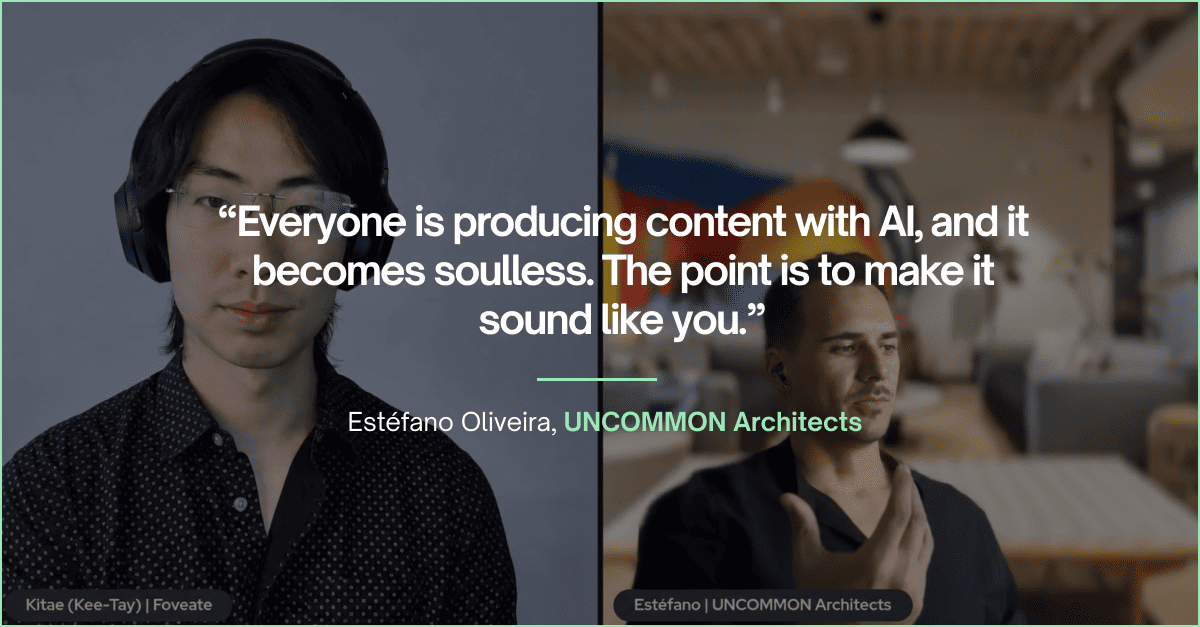
Everyone is producing content with AI, and it becomes soulless. The point is to make it sound like you.
Estéfano Oliveira, UNCOMMON Architects
Where AI helps, and where it does not
Be clear about the division of labor. AI is good for research, for structure, and for a first draft you will then cut and sharpen. It is not good for final judgment, and it should never invent facts about a real project.
The number of bookings, the budget, the approval that took eighteen months, those come from you. Treat the output as a strong start that you own and edit, not a finished piece you paste and publish. The firms that get real value from AI are the ones that stay in the chair.
Where to start
Pick one task this week. Ask the tool what the through-line is across your last ten projects and who the ideal client for that work is. Then draft one LinkedIn post in your own recorded voice and edit it until it sounds like you.
That single loop, direction plus voice, is the whole method. If you want help turning it into a system that runs every week, from ideal-client definition to content that sounds like you, that is the work we do at UNCOMMON.
Frequently asked questions
Can architects use AI for marketing content?
Yes, and it works well for research, structure, and first drafts. The mistake is publishing the raw output. Used as a starting point you edit and own, it saves time without making everything sound generic.
How do you make AI writing sound like you?
Give it your real language. Record yourself explaining projects, transcribe it, and capture the words and framing you actually use. Save that as a project or custom instructions so every draft starts from your voice, not a generic one.
How can an architect use ChatGPT to find clients?
Use it to analyze your past work, identify the common thread and the clients who value it, and build a prioritized target list of firms or developers in your market. It is a research and direction tool before it is a writing tool.
What should architects not use AI for?
Final judgment and facts about real projects. Never let it invent numbers, outcomes, or details. Those come from you; the model helps you draft and structure, not decide what is true.
Are you ready to transform your studio?
A 30-minute strategy call. We look at your market, your target clients and what is keeping you off shortlists.

Estéfano Oliveira is the founder of UNCOMMON Architects, a business development and marketing agency for architecture firms. Trained as an architect in Spain, he moved into marketing after seeing talented firms stay invisible to the clients they should be working with. Today he helps firms win the right projects, whether their clients are developers and commercial owners or private homeowners.